
Being a soldier means, above all, committing to serve. But serving without resources: how – and perhaps, what for? Defence budgets are not expenditure, but investment. So the military should not be ashamed to talk about “return on investment”.
The happy news of the release of French hostages held in the Sahel is allowing the French press to discuss today, sometimes between the lines, the interfaces between issues seen as “security-related” and economic interests.
But the political handling of the conditions under which this hostage-taking was resolved sustains the schizophrenia – or at least the unease – felt in France about our country’s “interests”.
“Grand principles” and money
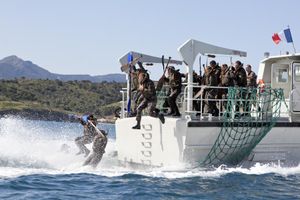 To the State, the defence of “grand principles”, including through armed intervention; to companies, the “dirty work” of money.
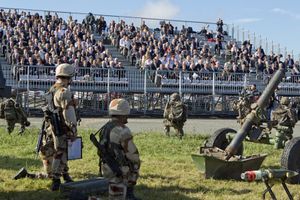
Without the burning news about the French armed forces – which makes less noise than the lorry ecotax gantries dismantled in Brittany and elsewhere (many others still stand today, never brought into service), yet affects at least as many families and jobs – one could, once again, ignore this usual division of roles. But the budget choices imposed on the armed forces and their environment resonate with this release in the Sahel.
French soldiers are not mercenaries, and they do not choose this very particular life – which by nature involves the possibility of death, given or received – for money. But their collective action is not carried out only in the name of “values”, more often invoked in support of ad hoc decisions than spelled out over the long term. More generally, it serves France’s interests: vital interests, strategic interests.
“Interests” have a bad press in France, where people do not like talking about money – even less so when they devote their lives to far higher principles. And yet, without defending “interests”, there are no supplies of energy, minerals or even food. And this is not a concept, but a very tangible reality.
The Sahel case of recent days makes it possible to talk about supplies of uranium and strategic minerals. But during the Syrian crisis, too few talked about natural gas and the struggle between Russia and the Gulf states to supply European markets through Syrian territory – and therefore about French interests.
Parallel elites
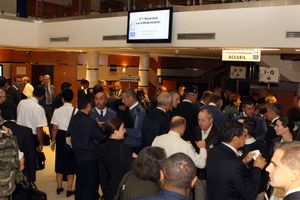
 The France of top decision-makers is divided into parallel elite castes. For example, the joint HEC/ENA/École de Guerre initiative – bringing together on 7 June the “students” of France’s leading business school, its elite civil service school and its staff college, with the worthy aim of presenting joint work – in fact showed, from the exchanges in the room, polite coexistence at best, but no real synergies. Énarques and HEC graduates benefit from “dual tracks” that ease relations between the State’s elite bodies and large companies… But where are the SMEs, the very small businesses? And what, in the end, are they in this “great game”? As for the military, they are strange men and women for the future economic managers, most of whom know nothing of this world since the end of national service, despite initiatives to promote the bond between the armed forces and the nation, including in their “leadership development” version… Why indeed spend money that would be more “useful” for education, major investments, companies… And on the young énarques’ side, they already know that the military is subordinate to the political: so, since the military are there to “serve”, let them listen first rather than speak…
Changing paradigm: talking ROI
 Modesty, discretion and self-sacrifice are structuring values for the military. But when budgets are cut to the point of breaking the defence tool, materially and soon morally, and when one has to justify oneself with the feeling of “holding out the begging bowl” to limit “social damage”, it is time to change register – even paradigm.
Defence budgets are not expenditure but investment, and as such they generate “returns on investment”. Intangible ROI, with the promotion of societal and democratic values, of “world views” – too rarely spelled out, incidentally, in national elections. But also very tangible ROI, in the short and medium term: markets, resources, jobs. And therefore the survival of values too. Because values only live if there are the means to carry, promote and implement them. Otherwise they stay in books – white papers gathering dust on library shelves.
Almost twenty years ago, the French intervention in Bosnia, at Jacques Chirac’s initiative, broke a culpable and murderous paralysis… But while the Americans sent their business leaders to promote well-understood interests (with, incidentally, a tragic plane crash), French companies lost the reconstruction of Sarajevo airport – even though our troops had held it, at the price of blood.
What have we learned since? Civil–military operations should serve education, humanitarian aid… but there is no question of mixing companies’ money with that. Let us leave these vulgar aspects to other countries… whose trade balance is less in deficit.
Afghanistan? There is no price on French lives. But the Chinese signed a mining contract in the north of the country while we were shipping out men and equipment.
Africa? The examples are many, on both the American and the Chinese side. We send our soldiers to fight and sometimes die to restore peace. But above all, let us not speak plainly about money and markets… We must atone for “colonisation”.
In human resources too
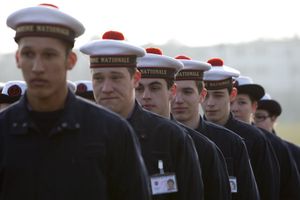 This change of register and paradigm should be able to irrigate defence policies, so that everyone can own them – without falling into mercantilism, but to rationalise budget trade-offs made even more difficult by the “emotional” distance between economic and political decision-makers and their armed forces, more often through ignorance than through ideology.
Among the possible applications, human resources management could take on this approach. Today, people often think in terms of “posts”, without weighing this logic enough against that of “skills”. No doubt out of the egalitarianism needed for cohesion, also because many training courses are cross-cutting, but probably above all out of habit.
Yet the ROI of a skill is not always measured only by the rank of the person concerned – even if bonus mechanisms aim to take certain specificities into account.
For example, can reservists’ “civilian” skills only be quantified through military classifications, or only through the prism of the indispensable bond between the armed forces and the nation? Or could they be seen as low-cost, and therefore useful, resources? But that is a subject in itself…
Leave a Reply