
In a project for society, as in a company project, it is impossible to build a lasting dynamic on interests alone.
Without shared values or a shared purpose, how can we get through periods of turbulence? When a shipwreck looms, the stowaways are always the first to abandon ship.
Everyone is somebody’s pariah
In a company, everyone can fairly easily find someone to blame for a difficult situation: sales teams that do not pull their weight, marketing that imposes ineffective campaigns, IT changing its system yet again, human resources failing to attract or retain talent…
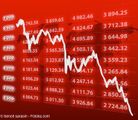 Today, Greece is in difficulty, singled out for its disastrous management of public finances. But are the French exemplary enough to lecture others? Because after Greece, who will be the worst pupil in the class? Spain, Italy, Portugal… or France?
Moreover, public action is not limited to the major economic balances between tax collection and collective spending. When it comes to the ability to assert respect for fundamental values, such as individual and public freedoms – including through armed action beyond our borders – a different ranking could no doubt be drawn up.
Dying for Danzig, or for Thessaloniki?
In a company, cohesion between entities is often natural, even if tensions are frequent: each has a mission and, a priori, a contribution to make.
If the European Union is reduced to financial solidarity between States, it becomes easy to denounce the impecuniousness of some or, conversely, the lack of generosity of others – and to encourage secession: monetary, economic, even political.
But while European (re)construction is recent, it may be useful, in these troubled times, to recall its purpose.
The two world wars of the 20th century were, in Europe, civil wars, and the founding fathers of the European Union wanted above all to prevent European nations from fighting one another again, at the cost of millions of lives and the loss of a leadership never regained – a long way from the notorious French article of 1939 that asked “Why die for Danzig?”, arguing against going to war for Poland.
Unable to reach agreement on defence, Europeans wagered that economic exchanges would generate enough shared interests for them never to go to war with one another again.
Then, over the last fifteen years, European defence has gained new momentum, with the geostrategic upheavals on the continent but also under the pressure of economic constraints. Today, Europeans fight together, under the blue and gold flag or within NATO operations, to assert their common values and interests.
Reaffirming a common project to overcome crises
 In a company, when a crisis threatens collective survival, a return to the company’s fundamentals is a powerful lever for remobilising energies.
To revitalise teams and put their hearts back into their work, leaders must then “get up on the soapbox” and remind everyone of the company’s purpose, its common project. And they must also update the foundations of the collective dynamic: objectives and rules, strategy and shared ways of working.
For many, a currency is not just an instrument serving trade, a physical extension of the free movement of citizens, goods and services. It is at least as much the symbol of public – and therefore shared – power.
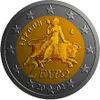
So, to those who see it this way, let us point out that the Greek two-euro coin bears not the image of a monument or a national hero, but that of the mythological figure of Europa. This tiny piece of metal therefore recalls, in all its fragility, our common, founding roots – beyond the mere instrument.
Today, in the face of the European crisis, one may regret that political decision-makers say little about the purpose, the project and the stability rules of the European Union. They appeal to interests. Not to shared passions. And yet the stakes are high.
Leave a Reply