
On the occasion of France’s National Reservist Day (10 April), it may be useful to recall a few characteristics of these individuals who often escape attempts at classification – and therefore at understanding.

By definition, a military reservist is a citizen who voluntarily devotes part of their time to the armed forces. This relationship is necessarily governed by a contract: an “engagement à servir dans la réserve” (ESR – literally a “commitment”, but in fact a formal contract to serve in the military reserve), which works like an intermittent contract with time chosen by mutual agreement, which pays for the time spent; or at least an approval as a “voluntary collaborator of the public service” (CBSP), which formalises and recognises an entirely unpaid contribution.
The big cats
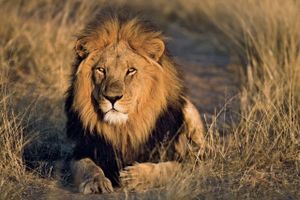 First there are the “big cats”, lords of the domain: reservists retired from active service. After a classic, often long career, during but also after their period of mandatory availability (five years after leaving), some choose to extend their commitment to the armed forces, for a few weeks a year (sometimes a few dozen).
With them and for them, it is a win–win arrangement. They supplement their pension as young, active, fit and competent retirees. And the armed forces benefit – especially in times of drastic downsizing – from immediately employable personnel who know the post they occupy perfectly (sometimes it was their own a few months before this change of status), or at least the context, rules and specific issues of this professional world. For the armed forces, they are real “part-time professionals”, employable immediately and easily.
To those who, discovering this situation, would like to read here the criticism of a knee-jerk anti-militarist, quick to hunt down soldiers as suspect by nature when not downright dangerous, it should be pointed out that companies – but also State services and local authorities – do the same, employing as consultants (self-employed status is very handy) young retirees or “early retirees” whom reorganisations pushed out in full possession of their skills, to everyone’s great misfortune…
Happily, in all these cases, human ingenuity always prevails over the complexity of administrative measures when it comes to keeping the shop running – especially the higher interests of the country… The sword and the shield, in the right direction this time.
Experts in the workings of the administrative machine – because the armed forces are an administration, let us remember – these reservists often make it work directly for themselves and for the accomplishment of the mission, moving from active to reserve status without anyone noticing… except their master tailor, happy to sew on a few extra stripes, earned quite naturally in recognition of their seniority and their useful availability as active retirees.
Seen from outside, their status as “servicemen” does not change: they remain what they always were, but only part-time. Those around them notice – or not.
The dinosaurs
 Then there are the dinosaurs. Since the end of the last century and the suspension of national service, they are by nature destined to disappear… After their compulsory service – now long ago – they wanted to continue serving in the armed forces, at first rather informally and then, over the years and with changes in status and regulations, with a more formal link.
While their extinction is inevitable, their motivations are complex. They run pre-military training courses and citizenship days, and hold various posts in the armed forces, often in France and sometimes on overseas operations. They wear the uniform, hold a rank and carry out very “military” activities. At home, they are sometimes looked upon with pride, sometimes with irritation, when their absences come at the expense of family life or professional activity. For some dinosaurs, discretion has therefore become a habit.
Some even see them as “adventurers”, if not as “fantasists”. Others attribute parasitic practices to them (the pay, the medals, the uniform…). Often they are tolerated, as long as they do not disrupt too much the workings of already overstretched services. It is up to them to adapt, not the other way round!
It is true that they are hard to pin down. Most of the time they live in the civilian world. Of course, they spent a year in the armed forces (sometimes a little more), but that was long ago… So they are not professional soldiers. But as they get older, they also acquire some experience. Within the armed forces, because they take training courses, sometimes alongside their active-duty comrades. And in their “civilian” professional activity, which could sometimes be useful to the armed forces. Their legitimacy, even their authority, is sometimes recognised.
But all in all, they are not “warriors”, and rarely “specialists”. So why bother with them, especially when there is no time to carry out the assigned missions? Just wait for them to disappear… Mechanically, and at the latest when they reach the age limits. And at home too, people wait for them to tire of these “children’s games” – unless they dread their return…
The oxpeckers
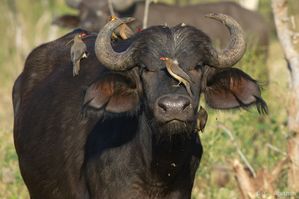 For some time now, the “oxpecker” species has been developing (birds that accompany large mammals, as remoras accompany sharks): citizen reservists. Although it has existed for several years, the armed forces used to see this species as “grandpas” – often likeable, but also time-consuming and sometimes cumbersome. In these times of harsh austerity, they now find it has many advantages.
Indeed, this citizen reserve costs nothing while providing various services: outreach, speaking well of the institution to those around them, and contributing to the resilience of society by helping to spread a “good civic word”. Some go even further, generously providing the armed forces with precious “civilian” expertise.
Each of the services has therefore set out to recruit emblematic personalities (artists, sportspeople…) but also qualified experts in professional fields useful to the armed forces. The ambition now is to rejuvenate this population by recruiting a diversity of civil society actors, younger and from all backgrounds.
But what motivates these “oxpeckers”? Some are former big cats who, as the years go by, can no longer hold operational posts. They then get involved in veterans’ associations, meet up with their comrades and contribute in particular to the duty of remembrance.
But those now emerging are a new variety… They have no military experience – most often because of their age, since it is impossible to become an operational reservist after 30. But they want to give concrete form to a civic commitment – “citizen” commitment, as people say today. So they give their time, their expertise, their energy. Free of charge. Some services even give them the right to wear the uniform, others only a badge.
Their action on behalf of their “host” is often limited to its “surroundings”. They perform small services and also act as an alarm when there is a disturbance near the great body. They can be a little cumbersome but, overall, they are quite useful and, above all, they do not affect the inside of the social body – indeed they are managed separately, often by the top brass.
And then, the bond between the armed forces and the nation is a command directive. So they are tolerated, sometimes even regarded with goodwill, curiosity and interest. Because they do not cost much, apart from a little time and attention. And it is a bit of “public relations” with representatives of a civilian world that may one day, when it is time to retrain for civilian life, prove useful, directly or indirectly.
Seen from outside, it is a strange population. For the former “big cats”, it is simple, almost logical. But the others? Serving for free? There are so many associations and humanitarian causes…
The meerkats
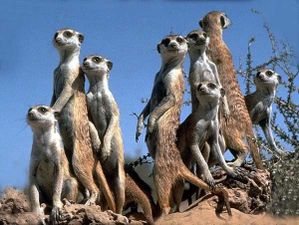 The “meerkats” are an even more recent species. In the reservists’ bestiary, they are destined to succeed the “dinosaurs”.
Like the “oxpeckers”, they come from “civil society”. But through initial military training (generally two weeks of training and a one-month placement), they acquire an operational “military veneer”, a rank, a status and a contract.
Administratively, nothing distinguishes them from the “dinosaurs” – nor from the “big cats”, for that matter. Like them, they hold an ESR and are therefore employed – and paid – by the armed forces for a given post. But their experience of the military world is even more limited than that of the “dinosaurs” – and obviously than that of the “big cats”.
So for the most part, units remain very puzzled about this new population. These young reservists are potentially symbols of the bond between the armed forces and the nation, so dear to the top brass. But then, why distinguish them from the “oxpeckers”? All the more so since they have to be paid, equipped, trained and employed… And every company knows the problem: an “intern” takes time, sometimes more than they “bring in”. Add the fact that they are less available than the “big cats”, since they are students or young professionals. So it is often hard for them to respond at a moment’s notice, or to free themselves for long periods.
As for their “style”, it sometimes surprises the institution. Children of the digital generation, they take photos and post their “exploits” during pre-military training or exercises… Hard to control, then, and not disciplined enough. Of course, the buzz they generate is rather positive, enthusiastic, generous… But free by nature.
The future of these “meerkats” is therefore very uncertain, despite the investment in initial training that the armed forces make through pre-military training courses and similar schemes. Keep them, maintain them, train them… Why?
With reservists, inventing “reverse skills management”?
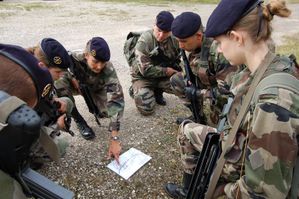 Apart from the “big cats”, whose usefulness is recognised and who find meaning and shared interests in this post-active commitment, the role of the military reservist is subject to many uncertainties.
Because these military but “civilian” reservists can only be dealt with individually, whereas the armed forces often work in “big flows”: for posts (although this is less and less true), and for training and career tracks.
Because of their small numbers (especially once the “big cats”, who are the majority, are removed), reservists find it hard to fit into the categories of the military world. Very concretely, the ministry’s information systems find it very difficult to track them effectively – even though (and perhaps because) the stated aim is to treat them like their active-duty comrades.
And once again, in these times of downsizing and massive transformation, the staff in post do not, a priori, have enough time to take their specific needs into account, when the very future of the “core business” is unsettled, even threatened.
Yet their individual skills could certainly be useful to the armed forces. Provided a “reverse skills management” can be practised, in which posts are no longer defined first and profiles sought afterwards, but in which the available resources are identified (qualitatively, quantitatively, specifically) before asking how they could be useful to the accomplishment of the missions. A real paradigm shift, admittedly – but is it entirely inappropriate, when the pressure on resources is increasing?
Finally, beyond the bond between the armed forces and the nation, which can help the institution make its issues and constraints better understood, including at the highest level of decision-making, reservists of every species contribute to the resilience of our society, individually and, when asked, collectively. Now that “the end of History” is nothing more than a concept overtaken by conflicts and tensions, these islands of stability can only be assets – not to be forgotten, and perhaps also to be looked after.
PS (after publication):
Some were upset by my “bestiary”, which was meant, mischievously but without any disparagement, to describe different contributions that are useful and respectable.
For citizen reservists, outreach in France and abroad, and the contribution of expertise.
For former active-duty personnel, the capacity and skills to serve immediately, with all their knowledge of the trades, processes and issues.
But I have a particular affection for the other two categories: the “dinosaurs” and those who, as the years go by, will replace them with the experience they acquire and the responsibilities they take on – the “meerkats” – operational reservists from the civilian world.
As sociologists describe, interactions between professional worlds succeed thanks to “marginal secants”: those who belong to two sets at once. Because they understand and, above all, practise the specificities of each.
Citizen reservists have a generous empathy for the institution and a desire to serve, and they discover it through educational activities. They bring it their “external” skills. And that is precious.
Former active-duty personnel remain, even after leaving the institution, steeped in their original culture, even if many manage to step back a little. That said, it is also an asset, because they are a real pool of forces, immediately useful.
But the “marginal secants” – “dinosaurs” and “meerkats” – are at the interface of the two worlds: with a military “veneer” and, above all, because in their operational posts and in the exercises carried out with their active-duty comrades, they have concrete experience of life within the armed forces, of their constraints and specificities.
Every reservist is useful and complementary: individually and collectively, as long as each knows and recognises the other’s contributions, respects them and values them.
PS 2: there was a follow-up on the defence blog run by the journalist Philippe Chapleau (in French): https://lignesdedefense.ouest-france.fr/la-journee-nationale-des-reserves-une-occasion-pour-valoriser-toute-la-communaute-de-defense/
Leave a Reply