
The dramatic events in Japan will have many consequences, but there is one that does not spontaneously come to mind unless one is living through the situation very directly: the quality of relations between Japanese and Westerners.
Many expatriates quickly decided to leave the country, for their families and for themselves. There is no question of challenging these decisions – especially not from Paris, safely sheltered, with only an indirect, on-screen “experience” of the earthquakes, the tsunami in wintry weather and the nuclear threats of recent days.
But one can imagine that this physical distancing is now perceived by some Japanese as abandonment, while they carry on with “day-to-day business” (ensuring political decisions, economic flows, essential services…) or even dealing with the consequences of last week’s events, despite the shocks suffered and the ongoing threats.
What kind of solidarity with Japan?
The nature of expressions of solidarity always carries meaning: help is not perceived in the same way when it is financial, material or human.
Financing the reconstruction of the stricken areas and stabilising the Japanese economy are already on the agenda, and that is essential. But the financialisation of the economy will limit the scope of these decisions: what are billions worth when they can be “created” by States that are already over-indebted?
Equipment for fighting nuclear contamination is starting to be sent to Japan (borated products, protective suits…), and that is fortunate. Because an extremely equipment-hungry battle has begun, to contain the radioactive elements and to protect people from them throughout the work. And whatever the state of preparedness of Japan’s civilian and military forces, their stocks cannot last for ever…
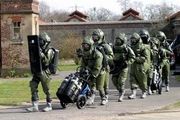 But there is also the human element. The technicians, and now the soldiers, assigned to operations on the site will also be subject to “wear” linked to exposure to radioactivity. Without endangering their health, they can work while receiving a given dose of radiation, accumulated over time and avoiding “peaks”. When the maximum dose is reached, they can no longer be exposed, and replacements must be found… We then enter into a question of the “pool of forces” available. The experimental robots the French and Americans are sending will undoubtedly be useful for fighting where exposure is too high. But people will be needed to work on the periphery. Who will go?
When it comes to keeping the peace around the world, we know how to send our soldiers, at the risk of their lives, and without much support or respect from our fellow citizens. Will it be the same when the task is not to use weapons, but to carry out “civilian” operations in a hostile environment? We have already seen the armed forces on our beaches after oil spills, or on our roads after storms: “domestic operations” are now one of the armed forces’ missions… But will we go as far as deploying them in a context so sensitive for the collective psyche – even though the Taliban are no less deadly than ionising radiation…
And then, if it is our soldiers who go, the symbol will not be the same: as in Afghanistan, if they put themselves in danger, it is because that is their job… a poor image of national cohesion, in which commitment is measured by the salary paid.
Solidarity – what for?
Before national service was suspended, there was the possibility – entirely theoretical in the post-1989 context, as was seen as early as 1991 with Operation Daguet, France’s contribution to the liberation of Kuwait – of the nation committing itself in solidarity, by sending its sons to defend our values and our freedoms. But with public spending priorities reallocated to other items – social benefits, public-sector jobs… – and the grumbling of those who did not want to “waste their time”, we moved to a professional army.
“Free” time now seems too precious to be given to the national – or European, as the framework could be today – dynamic: leisure, television, university courses leading nowhere, so much time “voluntarily” allocated to personal projects… Solidarity is now measured only by a financial contribution – taxes and levies – but for what project for society?
These purely French considerations may seem far removed from the Japanese tragedy… and yet.
 If solidarity at national level is already shaken, how capable will we be of showing that our international relations are not merely economic and contractual, but part of a common project, in which realpolitik also rests on shared values such as democracy, individual freedoms, and the development of people and technologies?
Because in a world where physical and technological resources are scarce – especially those used to build the physical infrastructure of our “information societies” – trade relations can no longer be independent of political synergies, and all the possible funding – which we no longer have – will be useless without mutual will. Because trading is not just buying; it is above all exchanging.
Customers and suppliers, or partners?
Our capacity to commit ourselves today in the Japanese tragedy will no doubt leave a lasting mark on relations between States, but also between peoples.
Some think that expatriates never integrate, and that by staying they would have changed nothing. Now that radioactive dust is reaching Tokyo, one can only be glad, for those who were able to leave, that they anticipated the risk and put their families out of harm’s way.
Others, despite everything, have chosen to stay at their posts, so that life in Japan can go on as far as possible. In this real battle on the economic front, without which there would hardly be any lasting political project, they are no longer engaged merely in a contractual customer–supplier relationship, but show themselves to be true partners, who continue to bring their skills and their values across borders.
Together with those who will intervene physically in the fight against the nuclear fire and the consequences of the scourges that have struck Japan since last week – because infrastructure will have to be rebuilt, and perhaps reconfigured – they will truly embody the solidarity we prove capable, or not, of putting into practice.
Our political leaders and business leaders will therefore, in the coming days, each in their own field of responsibility and action, take decisions with heavy consequences. And when they express them, let them not forget that, in the electoral arena as in workshops and offices – and of course internationally, in a theatre of conflict or disaster – a message is only truly credible when it is carried physically, despite the distances and the possible use of networks and media, and above all when it is relayed, after the announcement, the emotion and the communication, on that same ground, in its implementation.
Leave a Reply