Your questions before working with us
Before entrusting us with an assignment, it is natural to want to know who will do the work, how, for how long, and with what results. Here are our answers to the questions we are asked most often.
Who and for whom
- Who does the work?
- Who do you work with?
- Have you already dealt with a situation like ours?
- Why Kaqi rather than another firm?
Difficult situations
Who and for whom
Who does the work?
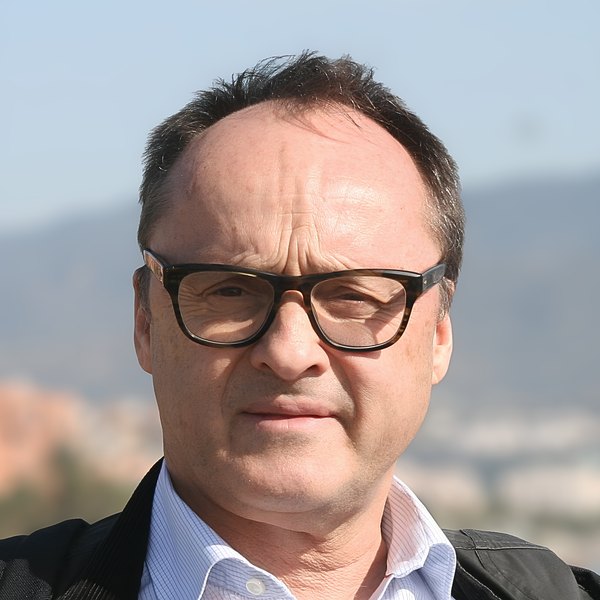
Alexis Kummetat, his clients’ direct point of contact: you deal with the same person from the first conversation to the last follow-up, including for a seminar of more than a hundred people. He is also glad to work with your in-house teams or alongside other consultants when the project calls for it. And if your situation requires technical or regulatory expertise, in employment law for example, he brings in a specialist and tells you beforehand.
Who do you work with?
Often with leadership teams, but at every scale: a project team, a site, a department, up to the strategy of a group of several thousand people. For companies in industry, energy, construction, transport and services.
And territorial projects, for SNCF, EDF or other companies providing services to local areas, or chambers of commerce, which bring local authorities and State services around the table.
Have you already dealt with a situation like ours?
Our clients come from industry, energy, construction, transport and services: SNCF, EDF, General Electric, Bouygues Construction, setec, Parker Hannifin, Disneyland Paris… (see our references). In our first conversation, we tell you about a situation close to yours: what was blocking, what was done, what changed.
Why Kaqi rather than another firm?
- A direct point of contact, who does what he proposes: nobody stands between the person who listens to you and the person who does the work.
- Assignments tailored to your needs: short to unblock a situation, longer to support a roll-out. With no team to keep busy, we have no interest in extending an assignment beyond what is useful to you.
- A perspective that brings together organisation and human dynamics, two subjects often dealt with separately.
- A method that builds on allies and synergies rather than fighting opposition. Your teams build the solutions themselves, and that is why they hold after we leave.
To find out more: Alexis Kummetat’s background.
How an assignment unfolds
How does an assignment with a leadership team unfold?
It is one of our most frequent types of assignment, whether with an executive committee, a management committee or the leadership team of a site or project. It usually follows five stages:
- Clarifying the objective of the assignment with the leader.
- Holding one-to-one interviews with the team members.
- Drawing a diagnosis and recommendations from them: for the collective session ahead, and for other actions, before or after it.
- Facilitating the collective session, in a participatory and productive way.
- Providing follow-up suited to your needs: a one-off review of the commitments made, or support for the action plans.
Most often over four to six weeks.
How long does an assignment last?
- Often four to six weeks: the time it takes to unblock a situation or restart momentum, followed by check-ins to make sure it holds.
- Some transformation or performance improvement projects need more: hands-on support over several months, rolling out the action plans with the teams concerned and helping them put them into practice.
- Coaching a leader is also a longer-term commitment, usually with one meeting a month.
How can you tell whether it has worked?
The criterion depends on what you expect, and we set it together at the outset. Depending on the assignment:
- the conflict is resolved;
- the teams commit to a project they share;
- the decision you needed is taken;
- the seminar has delivered results and made people want to carry on.
The check-ins are there to confirm it with you.
What do you leave behind?
First, a collective dynamic: a team that is moving forward together again. Then commitments and action plans, built by your teams from what they produced during the seminar. They are theirs, not ours: that is why they hold after we leave. The check-ins make sure of it.
Difficult situations
How do you bring reluctant teams on board, or work in a matrix organisation?
We do not talk about “resistance to change”. The real question is who is driving the project, who is holding it back, and why. We start by identifying these players, then we build on the project’s allies rather than trying at all costs to win over its opponents.
In a matrix organisation, tensions between departments are normal, and even useful. Everything depends on how they are settled: who decides what, and how disagreements are resolved. That is what we clarify and adjust with the people concerned, so that they commit to a lasting way of working.
To take stock on your own first, two of our free tests can help: “The stakeholder map” for your project, “Who calls the shots?” for your organisation.
What does analysing organisational and human factors change in a merger or a transformation?
It complements the classic approaches. Rather than stopping at who is resisting or who made a mistake, we look at how the work is actually done on each side, and why. In a merger, organisational decisions often collide with these real practices: understanding them before transforming them avoids breaking what used to work.
This approach is in line with sociodynamics, which favours extension over containment: building on synergies and on what moves the project forward, rather than wearing yourself out dealing with opposition.
Getting started
How does the first conversation work?
It is free of charge and with no commitment, and we prefer to meet you in person: that is the best way to understand a situation. If distance or circumstances make that impossible, we start by phone. You tell us what is blocking, and we give you a first analysis. We then put it in writing, with a proposal on how we can help.