At the height of the first lockdown, we asked you about your feelings, your plans, your wishes. In September, before plunging back into these periods of isolation, we refined these questions by looking at your practices and prospects regarding remote working – one of the ways we now live, and not only professionally. It has now been nearly a year of upheaval. Where do we stand in our thinking about what is “essential”? Here are my own reflections.
The first lockdown was a shock. Surprisingly well lived by many – and not only by those who benefited from economic support measures, a fixed income or maintained pay, and who lived in comfortable surroundings. In the exceptional climatic interlude of a radiant spring.
After the initial stupefaction, this “so very particular” period (the now hallowed phrase) had also allowed everyone – at least those who agreed to take the time to answer our questions – to take stock of their lives. Personal and professional.
With one wish for many: to find a better balance between the two spheres – and remote working opened that door for those whose work allowed it. But also with very widely shared gaps: social, family and professional interactions. And worries that were beginning to take shape – so prophetic.
For some, the summer marked a return to activity – while some companies settled into more permanent remote working and others were forced to remain closed. For the former, this period had been devoted to intense activity, catching up on time lost on ongoing projects, and the autumn promised an enthusiastic restart. No doubt difficult, but determined – and it was this rather positive feeling that emerged from our surveys.
And then came back the measures to control social interactions – lockdown.
Man, a social animal in danger
If there is one term particularly frightening and symptomatic of this period, it is perhaps “social distancing”, imposed through government communication. It was not just a matter of keeping physical distance to avoid potentially contaminating direct contact, but of avoiding all social interaction.
Unless one is a pathological misanthrope, one might have refused this term. And yet…
Both our surveys showed it: the greatest regret of the lockdown periods and of remote working practices was, for most people, the loss of interactions – and not only of seeing each other through screens.
For some, it was friends and family. For others, colleagues and customers – and not only to move projects forward more effectively. For many, a bit of both.
And free time to be with oneself, too, between two moments of interaction.
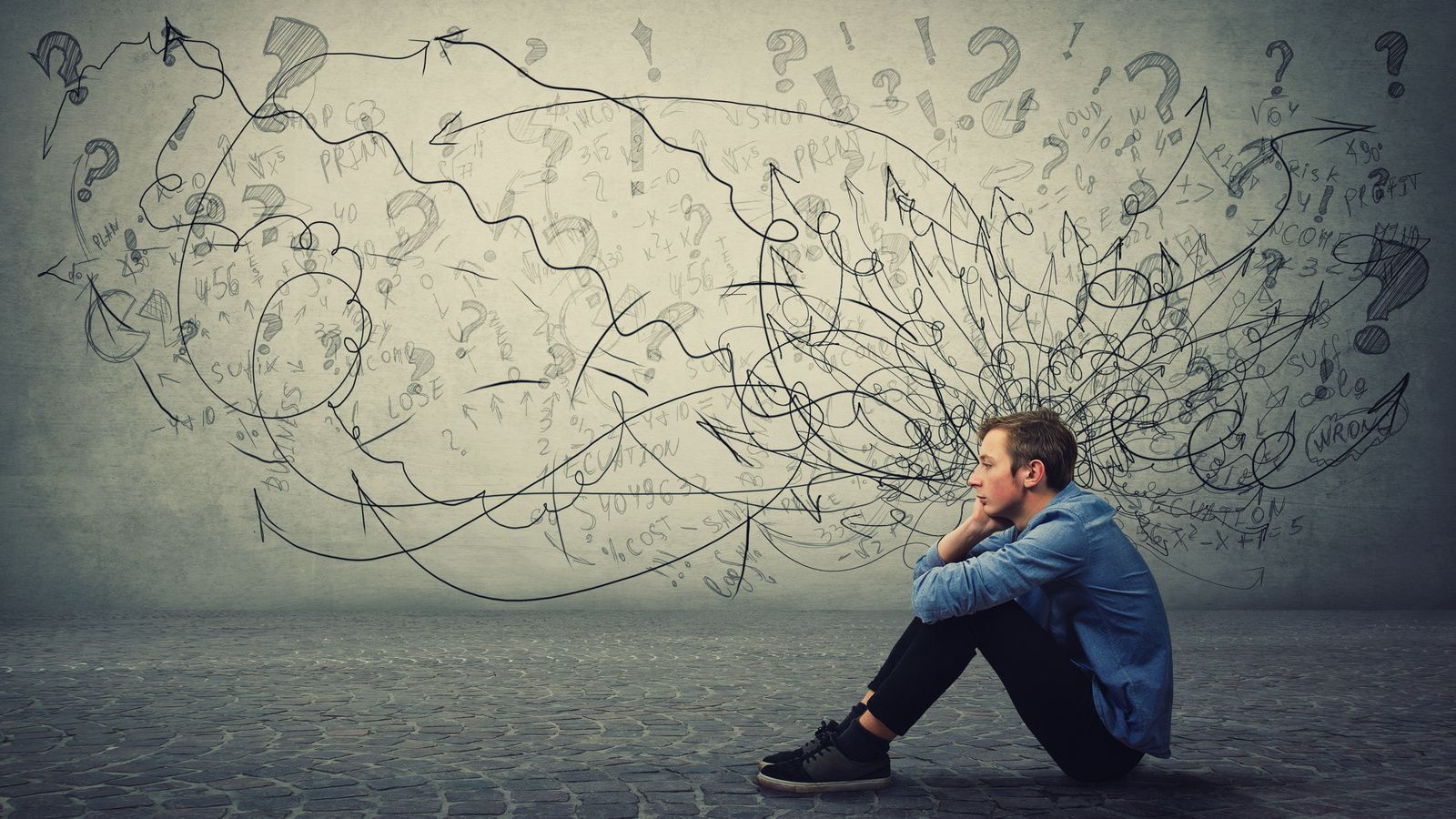
These past months have led many of us to live in a closed world. The other is no longer accessible. Or is frightening. Presented as a mortal danger, to be distrusted, avoided, kept away.
Submariners’ advice was precious and useful during the first lockdown. But all sailors – and, more broadly, all warriors – come back to port, to their social and family life. For those who have been through stressful situations, “decompression” periods are even planned, to help them get back on their feet and reconnect. And during their “isolation”, they are part of a community. Not an isolate.
Nothing of the kind for most people.
We are only just beginning to worry about the psychological and health consequences for isolated students. Yet isolation is not specific to them: elderly people, young professionals, single people with or without children, broken or fragile families… The oldest have their own syndrome, “failure to thrive”. The others are prone to suicide and destructive depression, with psychological and somatic consequences in the medium and long term. And the “essentials” expressed in our survey as early as April warned of the inevitable consequences of forbidding them – explicitly, or by suggestion day after day, month after month, playing on fear and guilt. These people may die carrying Covid-19. But not of it. Not directly[1].
Because our lives are not solely devoted to Taylorist economic activity – an important point, since all productive activities, apart from the archaic cultures of 19th-century industries and bureaucracies, take human interactions into account and benefit from them…
And yet… The French artist Grand Corps Malade put it beautifully in his song « Pas essentiel », listing all those things declared “not essential”: kissing someone, opening a book, a sincere smile, going to concerts, walking in the forest, dancing at a party, seeing people again… Really?
Organising work – or non-work?
This year will also have brought radical changes in ways of working.
Many modern, international companies discovered nothing new over these past months. Paperless work, remote management – through trust or through control – the “flex office”… were already common practices, acquired skills. And they knew both their advantages and their limits.
For others, these changes appeared to be radical innovations. At least they could, if they wished, draw on what was already being done, to adopt the new practices more quickly. But proclaiming a “radical novelty” sometimes makes it possible to buy time, to resist – or, conversely, to show off one’s talent for innovation. So one sometimes hears of “breakthroughs”… through doors that were already open.
It is not too late to learn, however. Because real ownership requires really confronting the difficulties of implementation. And, after the “best practices”, learning what lies behind paperless working, the tools, the organisations and practices of remote work. Because, once again, it is not as if no one had done it before.
What lies behind it is the probable dematerialisation of many jobs, towards countries that have not given up. Because working remotely, whether 20, 200 or 2,000 kilometres away, does not change much in many cases. Especially when work is seen only as “productive”, and not also as interactional.
There is much talk of the announced disappearance of “bullshit jobs”… But in the demanding economic context of “before”, which organisations were willing to bear costs with no added value? No doubt we all have a few examples in mind – and not that many at that. Unless we consider others as having no added value – but that probably owes more to social judgement, even jealousy, than to rational assessment. Because, once again, human economic added value can be productive, but also relational. And no doubt this unperceived added value was not “measurable” by the quantitative criteria of the Taylorist world (or of its avatar, “lean”…).
One can ignore this. But then one must choose to automate production, whether industrial or bureaucratic. And accept the social consequences.
Starting, initially, with “offshoring”.
On this point, are the remote-working fanatics – confident of their added value behind their screens, far from others who are necessarily “less efficient” – absolutely certain that their job could not be done just as effectively at the other end of the continent, or across the seas, before being done by a machine? Language? If not everyone switches to “Globish” – of English origin today, or perhaps Chinese tomorrow – Google Translate has made enormous progress, don’t you think? Combined with Alexa…
Unless their contribution to human interactions, which cannot be performed by intelligent programming, is significant… Here again, the experience of multi-site teams in international companies is precious and inspiring.
In any case, this situation should allow everyone to ask themselves, in their heart of hearts – and therefore in a protected space – in what way they are “essential”. Rather than judging others first. And to develop their strengths, too, and no doubt to showcase them. Or else to endure… Not essential.
Culprits? There are… plenty!
This is nothing new, but rather a classic of crisis and accident management. Since the “human factor” is by definition, in the Cartesian and then Taylorist view, the “weak link”, one must always look for the culprit. And one inevitably finds at least one.
This quest is not rational; it is the expression of a logic of power. If you want to protect the organisation, you find the subcontractor (even though someone recruited and managed them). And if you want to preserve a certain elitist inner circle, there will always be a scapegoat to sacrifice. If you want to denounce managerial tyranny, you just need to choose carefully in the food chain the person whose position will attract envy. If you are fighting cruel capitalism, it will of course be the consequence of a lack of funding. History shows this tropism in the denunciation of social origins (the peasant, the parent, the intellectual…) or ethnic ones, of political choices… And of course, even more easily now, one can endlessly decline all the variations of humanity, according to one’s choices, tropisms and projects…
One is always someone else’s culprit. So finding a culprit is always possible! You just need to be the most powerful at the time, or the most influential.
Finding solutions is much harder. And yet that is what a genuine approach to organisational reliability and lasting resilience must seek.
Accepting that accidents and errors are not – except in rare cases of deliberate harm – the expression of the “human factor” but the result of systemic interactions. Which cannot be handled with post-Taylorist logics, but only with the humility needed to navigate complex sociotechnical systems. Accepting uncertainty and imprecision, not confusing correlation with causation, making the necessary trade-offs, setting aside procedures that can only apply to known, repetitive, modellable contexts. Trusting.
Clearly, this crisis will not have allowed us to choose this paradigm. At least not as long as we keep looking for “culprits”. Sacrificial victims, because “not essential”.
The meaning of life – a supervised freedom?
The state of exception we are living through, which is settling in for the long term, is not the one that allowed our continent and our civilisation to develop. With its flaws, no doubt. But flaws we can only reflect on – and, where necessary, resolve – because its strengths and advantages are many and have enabled our development, despite the obstacles.
We have known terrible wars, sometimes lasting invasions, deadly epidemics. Famines and climatic events that our view of the past may put into perspective, but which were disasters at the time.
But in all these situations, our predecessors had room for freedom, for responsibility, sometimes for self-control. For intelligence, in any case.
To stay informed, one had to buy a newspaper, then choose to switch on a broadcast medium. Now, the assessment of each person’s behaviour, and its correction, can be centralised – provided people pay attention to the injunctions, even illegitimate ones, or that enough constraint is applied.
Will the meaning of our lives, their “essentials” – since it is the same word – have to be “standardised” according to “objective”, “rational” criteria, chosen regardless of how others perceive them? Regardless of our humanity?
Living in society is a terribly complex matter. Reducing the diversity of others’ expectations, points of view and “essentials” expresses the primacy of mechanistic, contemptuous, bureaucratic thinking. Ineffective. Not essential.
Opting exclusively for “economic compensation” is a further sign of the temptation to reduce our humanity to the activities of consumers/producers. Each taking their place in a “food” chain… Some being more “essential” than others.
Finally, treating a lasting crisis as an emergency, and thus choosing a single “essential” sector at the expense of all the others, is a mistake.
It is not only immoral; it is ineffective. And therefore dangerous. Not essential.
[1] On the first day of the first lockdown, the regional newspaper Ouest-France published an interview with a care-home resident who said: “I don’t mind dying of a virus; I don’t want to die of isolation”. How could we fail to hear this cry, and fail to think that others would cry out too?
Leave a Reply